Breaking News

Popular News



Enter your email address below and subscribe to our newsletter
Smart Discovery Store
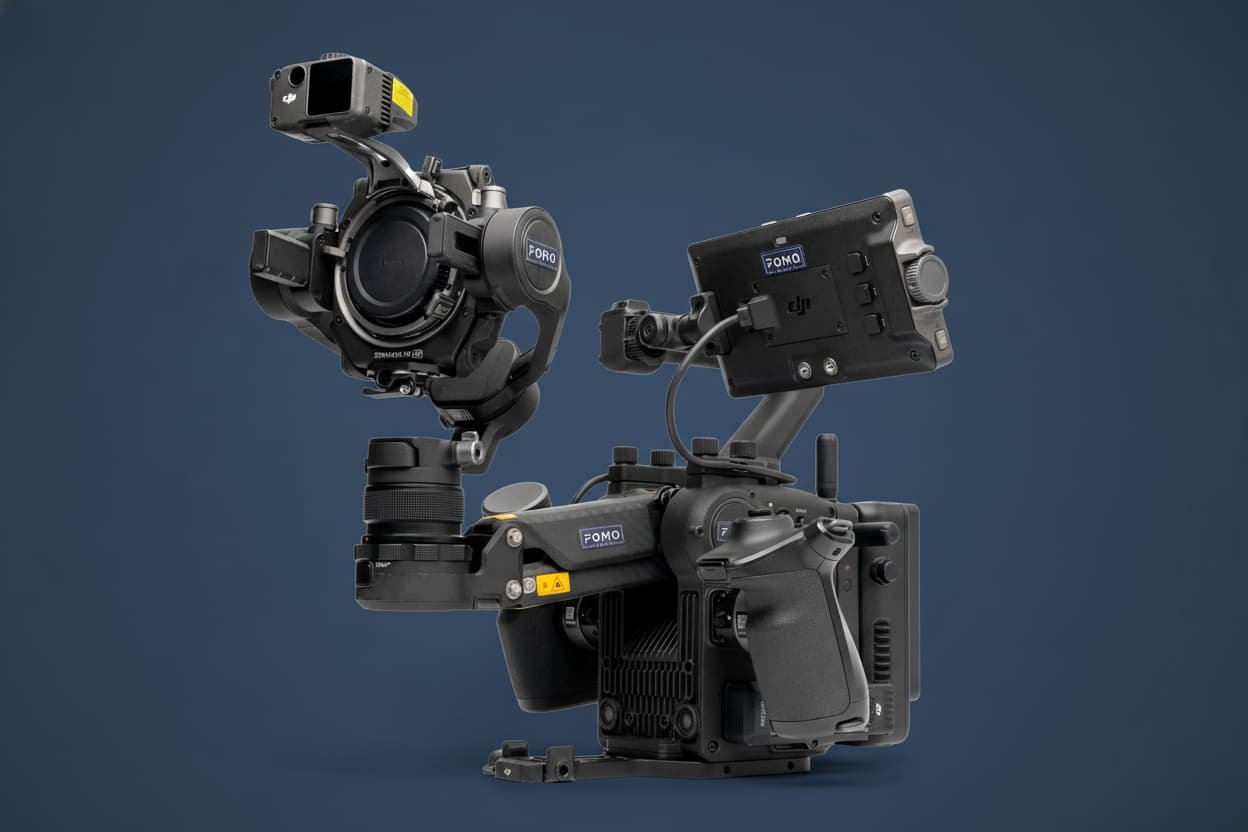
Every few decades, filmmaking hits a moment that makes directors, cinematographers, and camera operators step back and say, “Hold on… this changes everything.” It happened with synced sound. It happened with lightweight digital cameras. It happened when drones let anyone shoot aerials that once required helicopters. It happened when Steadicam unlocked a new visual language built on long, smooth, hypnotic movement. And now, the DJI Ronin 4D marks another one of those turning points — not just a small leap, but a reshaping of what a single camera operator can achieve without a massive crew behind them.
What sets the Ronin 4D apart isn’t just its image quality or its stabilization or its autofocus. It’s the fact that DJI took almost every department of a traditional camera setup — camera body, gimbal, wireless monitoring, follow-focus, transmission, raw recording, operator tools — and fused them into one single machine. Not a box you build around. Not a modular body that still requires a mountain of accessories. But a complete cinema package that comes out of the case ready to shoot the kinds of shots that once required a team.
For half a century, Steadicam was the gold standard for fluid movement. Films like The Shining, Goodfellas, and countless others shaped their emotional language through long takes made possible by a trained operator wearing a full vest and arm system. Gimbals came close, but they still couldn’t eliminate that vertical “walking bounce” without adding more equipment. And even then, they couldn’t replicate the weight distribution or organic feel of a traditional Steadicam rig.
The Ronin 4D solves the problem directly. Its built-in fourth-axis stabilization removes that vertical bobbing that gives away a gimbal shot the moment an operator starts walking. With the Ronin 4D, footsteps disappear. Forward motion becomes cinematic glide. A single operator can capture shots that previously required a specialist with years of training. This alone would be a major breakthrough — but DJI didn’t stop there.
The magic of the 4D is integration. In a typical cinema setup, you start with a body like an Alexa Mini, FX6, or RED, but then the real work begins:
– Mount the camera on a gimbal.
– Add a wireless follow-focus system.
– Add a wireless video transmitter for the director and AC.
– Rig multiple batteries.
– Balance the entire build.
– Add crew members to operate and monitor it.
That’s an hour or more of setup time. That’s weight, complexity, cables, failure points, and an entire human ecosystem needed to keep the shot running.
The Ronin 4D arrives as one fully engineered unit.
You pull it from the case.
You power it on.
You shoot.
Everything is built in — follow-focus motors, wireless monitoring, waveform and exposure tools, autofocus, internal RAW recording, 4-axis stabilization, and a monitoring system that feels like future tech compared to what cinema shooters traditionally use. This is the first time a camera has been designed from the ground up as a full ecosystem instead of a bare box waiting to be accessorized.
This isn’t just a tool for indie filmmakers. Major productions have already started incorporating the Ronin 4D as a specialty camera or even as a primary tool for long movement sequences. You can see it behind the scenes of shows like Silo and films like Civil War or F1. Even productions with massive budgets find that the Ronin 4D provides something more valuable than raw horsepower: speed.
When a film crew only has limited time on a location — especially something as restricted as an active F1 racetrack — the ability to deploy six or more Ronin 4D units at once and collect dynamic coverage changes the entire workflow. It becomes possible to achieve Steadicam-level shots with a fraction of the setup time and far fewer operators. Time is money, even for Hollywood, and the Ronin 4D saves an enormous amount of both.
But the most jaw-dropping use case so far comes from Netflix’s Adolescence. Every episode is a single unbroken take. No cuts. No hidden stitches. Just pure real-time storytelling. The Ronin 4D allowed the camera team to pass the rig through windows, hand it off between operators, drop it into vehicles, move it down stairwells, and even attach it to a drone — mid-take. Those moves simply weren’t possible with any other camera system on Earth.
This is what a true revolution looks like: not videos about specs, not marketing hype, but filmmakers doing things that were literally impossible before this tech existed.
Anyone who shoots real documentaries or commercial jobs understands that the worst environments often make the best images. Snow up to your knees. Sand blowing across a beach. Heat thick enough to fog your eyepiece. Mud, rain, dust, uneven terrain — the Ronin 4D is built to be used in all of it.
That’s not theoretical. You feel it the moment the rig starts floating in front of you while your boots sink into deep snow or you sprint with your subject through a forest. Shots that should look chaotic somehow become serene. You struggle for footing — but the camera glides.
In real productions — especially run-and-gun docs, chaotic event coverage, or high-movement sequences — this difference is transformative. The 4D allows you to shoot alone what previously required two or three people. You can move through doors, across water, between tight spaces, through shifting landscapes — all while maintaining a cinematic aesthetic that used to demand rails, dollies, vests, arms, and professional operators.
The Ronin 4D isn’t a gimmick camera wrapped in stabilization tech. It’s a serious cinema machine:
– Full-frame sensor
– 8K internal RAW
– ProRes HQ
– More than 14 stops of dynamic range
– Beautiful highlight roll-off
– Cinematic color separation
– Low-light performance competitive with high-end cinema bodies
Put its footage next to a RED Komodo or Sony Venice and yes, those cameras might hold a slight edge in certain extreme conditions. But the 4D is absolutely in the same conversation — and it’s stabilizing itself while tracking focus at the same time. No other cinema camera can make that claim.
Some say it’s too heavy. Compared to a mirrorless hybrid, maybe. Compared to a full cinema body on a Steadicam arm? It’s feather-light.
Some say it’s expensive. But when you factor in the cost of a cinema camera, a professional gimbal, wireless follow-focus, a dedicated transmitter, high-end monitoring, and the crew necessary to operate all of that — the Ronin 4D becomes one of the most cost-efficient systems in filmmaking.
Some say lens choices are limited. That was true early on, but now the opposite is becoming true. With DJI’s DL mount and the rise of compact cinema primes like Cooke SP3s, Sony G-Masters, Sigma Art glass, Zeiss Otus, and now the dedicated Viltrox Rays — the lens ecosystem has exploded. The Rays in particular feel tailor-made for 4D shooters: fast aperture, lightweight design, direct communication with the body, zero calibration, and seamless autofocus integration.
The Ronin 4D doesn’t feel like an experiment. It feels like the first chapter. If DJI packed this much engineering into version one, imagine version two. Or version three. The next decade of cinema gear may shift away from “camera bodies plus accessories” toward “fully integrated cinema systems.” The Ronin 4D is the first real glimpse of that future.
Like the Steadicam, it won’t replace every tool — but it’s redefining what one person can do without a giant crew. It’s expanding the cinematic vocabulary. It’s lowering the barrier to shots that once required experience, strength, and expensive equipment. And it’s letting filmmakers of all scales tell stories with movement that once belonged only to the biggest productions.
For many, including seasoned professionals, the Ronin 4D has already changed the way they think about shooting. And years from now, people may look back at this moment as the point where cinema cameras took a sharp turn into a new era of integration, precision, and freedom.