Breaking News
Popular News




Enter your email address below and subscribe to our newsletter
Smart Discovery Store
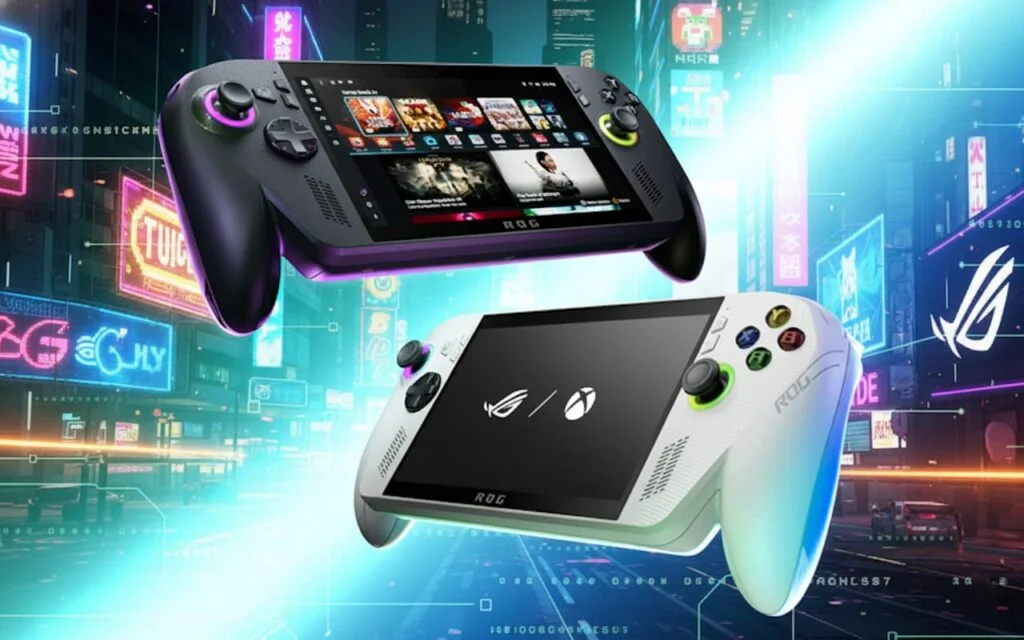
The ROG Xbox Ally and Ally X are the first handheld gaming PCs ever released with official Xbox branding, which instantly raises expectations. Xbox usually means simple, fast, console-style gaming — not a Windows device full of menus, updates, and background processes. But these handhelds sit in a unique middle ground: they look like Xbox hardware, they run an Xbox-style full-screen interface, but beneath everything lives Windows 11. That combination delivers power and flexibility, but also quirks that traditional console players might not expect.
Out of the box, both models boot into a familiar Windows 11 setup flow with the standard prompts, login screens, lock screen, and background services. After setup, the device enters the Xbox Full Screen Experience, a custom mode that hides the Windows desktop, taskbar, and wallpaper to save memory and feel more console-like. Your game library displays cleanly with icons showing which titles belong to Game Pass, Steam, Epic, or GOG, and everything can launch directly from the unified UI.
A long press of the Xbox button opens a fast app switcher that feels more polished than typical Windows multitasking. You can close apps instantly with the X button, alt-tab through running processes, and swap between games without touching the touchscreen.
But Windows quirks still appear. Exiting Steam games occasionally loses controller focus. Opening the desktop loads additional background processes that stay in RAM until you reboot. Updates happen in two separate places — Windows Update and Armoury Crate — which is perfectly normal on a PC but unusual for something wearing the Xbox name.
Where these handhelds succeed most is in controls and comfort. Asus redesigned nearly every input: taller thumbsticks with better grip, improved triggers, a more responsive D-pad, and buttons with tighter feel. Even the login PIN screen is mapped to the controller, making the handheld feel less like a PC and more like an Xbox console.
Ergonomics have improved dramatically. The new grip design looks bulky at first, but in hand it feels excellent — better even than the Steam Deck for long sessions. Despite larger batteries (60Wh on the Ally, 80Wh on the Ally X), total weight only increases slightly, and the new contours distribute weight more naturally through the palm.
The base model runs AMD’s Z2A chip, a Zen 2 architecture roughly comparable to a Steam Deck but with better performance headroom. The Ally X uses AMD’s new Z2 Extreme (Zen 5) chip, which performs significantly better at lower wattages — crucial for handheld devices.
Xbox positions the Ally for 720p gaming and the Ally X for 1080p, which is mostly accurate. Lightweight and indie titles run smoothly on both, while heavy AAA games push the Z2A to its limits. The Ally X handles modern titles better without draining the battery as quickly.
Thermals and fan noise are surprisingly good. Both models stay quiet under load, with the Ally X running slightly warmer due to its more powerful chip. Battery life is solid for Windows handhelds, and future updates may improve efficiency further.
Because the system is built on Windows, the experience will always differ from a traditional Xbox. Quick Resume is not available; instead the device uses standard Windows Sleep/Hibernate. The OS includes preinstalled apps like Teams, OneNote, and OneDrive. Brightness and volume can be adjusted in multiple places. And Armoury Crate — while powerful — can feel disconnected from the Xbox UI.
For seasoned PC gamers, these quirks are minor. But for someone expecting a pure Xbox console experience, the learning curve may be surprising.
The biggest surprise is pricing. Many assumed the Xbox label meant console-level affordability. Instead, these devices follow standard Windows handheld pricing — $600 for the Ally and $1,000 for the Ally X. That places them well above Xbox consoles and closer to enthusiast-grade handheld PCs.
Pre-orders show a clear trend: the Ally X sold out rapidly, despite its higher price. Enthusiasts understand the value of its performance, battery, and ergonomics. The base model, however, risks being returned frequently because casual users may expect a simpler, more console-like experience.
Still, for players who know what they’re buying — a portable Windows gaming PC shaped like an Xbox handheld — both models deliver strong performance, great controls, and the most polished controller-driven UI ever made for a Windows handheld.
The ROG Xbox Ally and Ally X are powerful handheld PCs wrapped in Xbox styling, and while they don’t fully escape Windows quirks, they offer one of the best controller-first portable gaming experiences available. Stunning ergonomics, improved battery designs, unified libraries, and excellent performance make the Ally X especially appealing for enthusiasts. Just don’t expect an Xbox console — expect a smartly engineered Windows gaming handheld with Xbox flavoring and impressive hardware refinements.