Breaking News
Popular News



Enter your email address below and subscribe to our newsletter
Smart Discovery Store
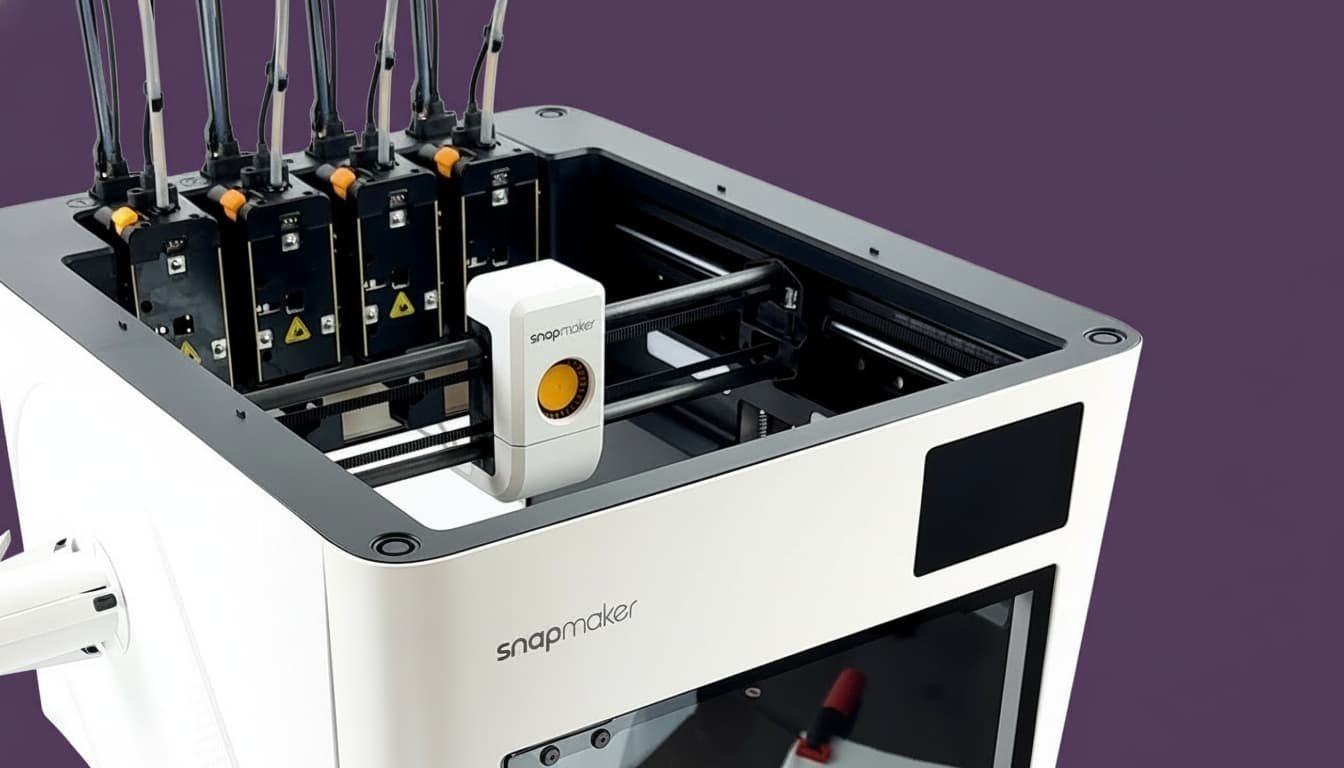
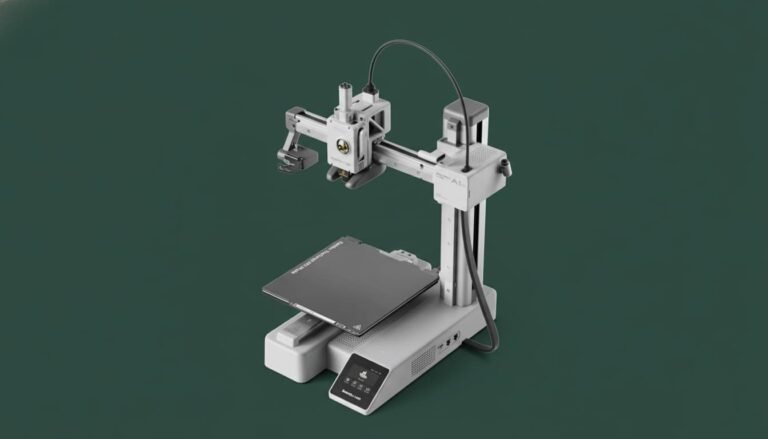
The Snapmaker U1 enters the market as one of the most ambitious multicolor 3D printers released to date, redefining what hobbyists and professionals can expect from multi-material workflows. Backed by more than 20,000 supporters and over $20 million in funding during its record-breaking Kickstarter launch, the U1 arrives with significant momentum. Its appeal is rooted in the machine’s advanced multi-toolhead architecture, designed to dramatically reduce waste, speed up tool changes, and eliminate color contamination common in single-nozzle multicolor systems.
Unlike purge-heavy alternatives, the U1’s independent toolheads minimize filament loss to near-zero levels. Small prime towers and initial load purges are often the only waste produced, making multicolor printing far more efficient. The machine consistently delivers clean transitions between materials, avoiding the bleeding and residue that can affect the surface quality of traditional multi-filament printers. With rapid 10–15 second toolhead swaps, the system maintains print speed while handling complex designs that require frequent color changes.
Snapmaker equips the U1 with a 270 × 270 × 270 mm build volume—larger than many CoreXY units in its class and ideal for props, helmets, masks, and multi-part assemblies. The CoreXY motion system ensures stability while maintaining the rigidity required for high-speed multicolor operations. Although the printer is not fully enclosed by default, an optional top cover allows users to work with materials such as ABS or ASA.
The machine runs on Klipper and supports fully offline operation without requiring cloud services. Key hardware features include auto bed leveling, a magnetic PEI plate, internal lighting for real-time visibility, a built-in camera for remote monitoring and time-lapse recording, and a 4 mm stainless-steel nozzle optimized for durability. A small internal purge bin handles the minimal waste produced during filament priming.
Snapmaker’s “snap swap” system is the centerpiece of the U1: four independent toolheads, each ready to deploy instantly. This architecture removes the mechanical complexity of multi-spool single-nozzle printers and improves long-term reliability by eliminating cross-contamination inside a shared hotend.
Packaging and assembly reflect a premium approach. All components arrive securely positioned within the chassis, and the setup process—from unboxing to calibration—takes approximately 15–20 minutes. Users install side-mounted motors, spool holders, PTFE tubing, and USB-C lines for toolhead communication, guided by a detailed quick-start manual that exceeds the standard documentation of typical consumer 3D printers.
Filament management is a strong point. Each included 500 g spool features an RFID tag that automatically identifies material type and color within the slicer. The side-mounted loading motors simplify filament insertion, eliminating manual feeding into the extruder. While only one spool per side can load at a time, the motors can handle filament on both sides simultaneously. Full loading for all four toolheads requires about seven minutes, and unloading takes roughly five.
Toolhead loading could benefit from a “select all” function, which would streamline workflows. Additional color options within the menu—including more variations of purples, greens, and oranges—would also support more complex palette planning for advanced creators.
The U1 excels in practical printing scenarios, delivering consistent quality across long-duration multicolor prints. Early sample prints, including a multicolor dragon model from IK3D, showcased extremely low waste and sharp filament transitions. Larger models such as the Super Prints multicolor mouse demonstrated impressive precision with only a single small prime tower produced during the entire print.
Benchmark comparisons revealed meaningful performance gains. The same mouse model printed in 3 hours 38 minutes on the U1, versus 4 hours 48 minutes on the Prusa XL and over 5 hours on the Bamboo Lab H2D. Competing machines also showed visible oozing and color bleed, especially in transitions between black and red filament.
Larger prints further highlighted the machine’s capacity. A Skeleton King helmet from LittleUp printed in 17 hours, with minimal artifacts despite a collapsed prime tower during the run. A complex four-color Wolverine–Darth Maul mashup from Nico Industries printed flawlessly in 25 hours 33 minutes—an all-in-one helmet that many 256 mm printers cannot accommodate without splitting.
The U1 also handles TPU exceptionally well, producing clean, continuous spiral prints and flexible strapping with ease. PETG, PLA, and mixed-material support structures behaved as expected, demonstrating consistent adhesion and predictable layer bonding. Prints such as the Gambit staff from Nico Industries and multi-material stress tests performed reliably once basic bed adhesion adjustments were made.
Snapmaker Orca, a customized version of Orca Slicer, provides the main slicing environment for U1 users. Print profiles are functional and optimized for multicolor workflows, though more presets for specific nozzle types and material combinations would be beneficial. Print time estimates currently display noticeable discrepancies—often underestimating by an hour or more on larger models.
Prime tower stability is the most consistent issue encountered. On multiple prints, small prime towers detached and toppled mid-print, causing stringing or surface imperfections. Simple fixes—larger brims, increased bed temperature, or relocating the tower to the front-right side for better camera visibility—would significantly improve reliability.
Minor workflow refinements would also enhance usability, including:
• Expanded slicer color library
• Better organization of color icons
• “Select all” load/unload options for toolheads
• Improved filament tip-trimming workflow after unloads
These refinements would polish what is already a highly streamlined multicolor printing experience.
The Snapmaker U1 represents a major step forward for accessible, low-waste multicolor printing. By minimizing purge material, maximizing print efficiency, and delivering clean transitions across designs, it challenges assumptions about the cost and practicality of multi-material 3D printing. Its pricing—$849 at preorder—positions it as one of the most affordable independent toolhead systems available, far below the cost of industrial multi-extruder machines.
Across props, models, accessories, and experimental TPU or PETG projects, the U1 shows a degree of versatility uncommon in consumer systems. With future slicer improvements, expanded profile options, and minor refinements to prime tower behavior, this platform has the potential to become the dominant choice for creators who want professional multicolor results without industrial budgets.
The U1’s combination of precision, speed, and almost waste-free performance signals an exciting new era for multi-toolhead 3D printing, offering capabilities that previously required far more complex machines.