Breaking News

Popular News


Enter your email address below and subscribe to our newsletter
Smart Discovery Store
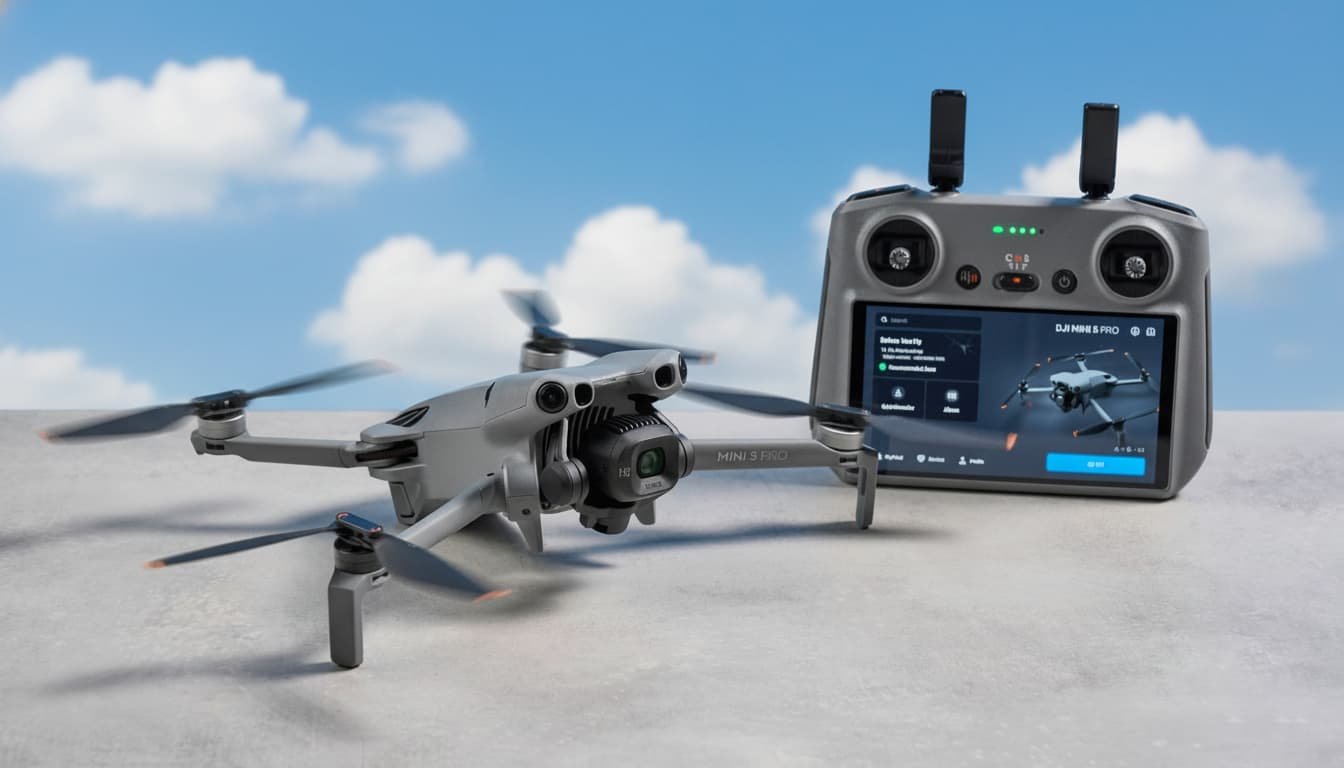
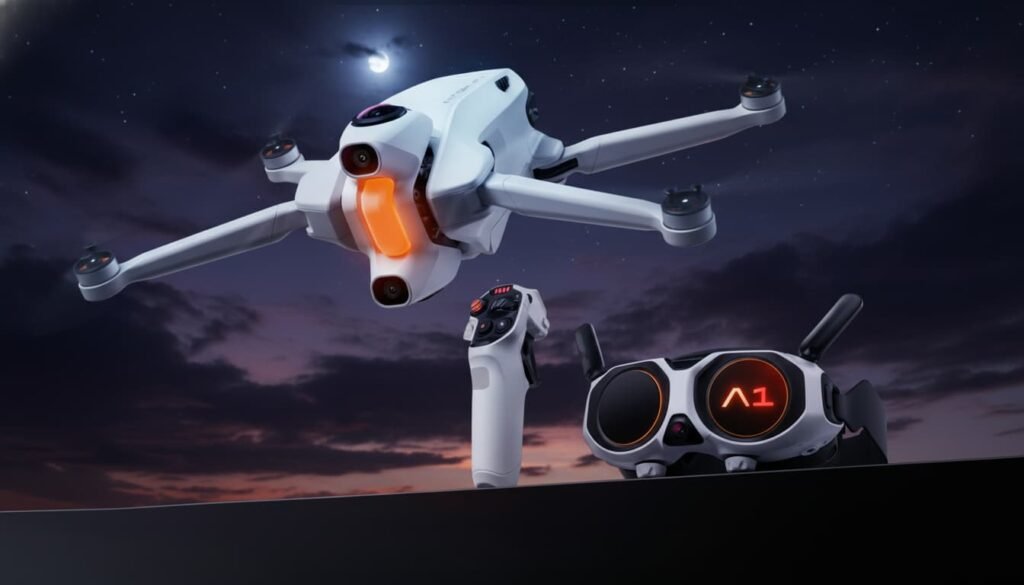
The long-awaited DJI Mini 5 Pro arrives with a surprisingly deep list of changes—big sensor upgrades, a redesigned rotating gimbal, a new medium-telly mode, improved obstacle avoidance, better performance, and faster workflows. After weeks of testing, the Mini 5 Pro feels like a true generational jump from the Mini 4 Pro, not just a small refresh. Let’s break down the major upgrades, what’s new, what’s improved, and what actually changes your real-world flights.
The new Mini 5 Pro immediately shows its redesign: a stronger, single-piece gimbal + prop guard that protects everything at once. No more juggling two separate covers. Folded side-by-side, the Mini 5 Pro is slightly longer and wears a darker gray color that gives it a more premium look. Width and height remain nearly identical, keeping the drone extremely compact. When unfolded, the Mini 5 Pro sits a little taller due to its arm geometry. And right when you open the arms, it automatically powers on—a time-saving feature that can be disabled if you prefer manual control. The drone is C0-compliant, though real-world weight now measures around 252 g, slightly above the 250 g mark. Push-to-twist propellers replace the old screw-mounted blades, massively improving ease of replacement—no tools, no stripped screws, no headaches. Performance also jumps: faster ascent (10 m/s), faster horizontal speed (18 m/s), and stronger wind resistance up to 12 m/s. In windy conditions, the Mini 5 Pro feels noticeably more planted than the Mini 4 Pro.
Here is the biggest upgrade: a full 1-inch sensor replaces the smaller 1/1.3″ sensor from the Mini 4 Pro. This is the same physical sensor size as the larger DJI Air 3S main camera—an impressive leap for such a small drone. Despite keeping 4K 60 HDR as the top resolution, image quality is clearly better. Zooming into comparison footage shows more detail, richer textures, cleaner shadows, and noticeably wider dynamic range. Auto mode can now pull up to 14 stops of dynamic range, giving sunrise/sunset scenes more highlight protection and better balanced exposures. Low light also improves. Even though aperture is slightly narrower and ISO limit stays at 12,800, the larger sensor delivers brighter, cleaner nighttime shots with less noise. Slow motion gets a bump to 4K 120fps, compared to 4K 100 on Mini 4 Pro. Color modes remain the same: Normal for straight-out-of-camera footage, D-Log M for maximum dynamic range (requires grading), and HLG. ND filters have been redesigned—they no longer twist off; they snap on. Photos also get a bump to 50MP, in RAW or JPEG formats.
This is one of the most useful new tools. The Mini 5 Pro now includes a lossless 48 mm medium-tele focal length—essentially a 2x optical crop that keeps full 4K resolution. The jump in detail compared to the Mini 4 Pro’s digital zoom is dramatic. This lets you get closer to subjects without flying closer, enhances parallax, and gives more cinematic composition options. Switching between wide and medium-telly is seamless and can be done while recording. During tracking, the drone automatically performs a smooth zoom between modes.
The new rotating gimbal takes creativity to a new level. Like the Mavic 4 Pro’s system—but in some ways even better—the gimbal can manually rotate up to 225°. You can control it by holding the C1 button and rolling the wheel or using the automatic gimbal-rotation QuickShot. True vertical shooting is still available, and unlike the Mavic 4 Pro, the Mini 5 Pro can still tilt a full 90° downward even in vertical mode—making it ideal for top-down vertical footage for social media. Combined with Spotlight mode, the rotating gimbal unlocks angles and movements previously impossible on a Mini-series drone.
The Mini 5 Pro keeps the same six obstacle sensors, giving full omnidirectional coverage, but now adds forward-facing LiDAR. This fixes the Mini 4 Pro’s biggest weakness: poor obstacle detection in low light. Where the Mini 4 Pro sensors shut down under street lighting, the Mini 5 Pro’s LiDAR continues working down to candle-light levels. This dramatically improves safety in evening flights, tight spaces, and urban areas. LiDAR also enhances nighttime Return-to-Home, giving the drone the ability to navigate obstacles even in dark conditions. The drone can also return home without a satellite connection thanks to LiDAR positioning—another major real-world safety upgrade.
Internal storage jumps from a nearly useless 2 GB to 42 GB—finally enough to save footage if you forget a memory card. Battery life increases slightly, with a max of 36 minutes (though real-world use averages around 23 minutes). The two-way charging hub has been upgraded: all three batteries now charge fully in just 115 minutes—much faster than the Mini 4 Pro’s 3-hour hub.
ActiveTrack 360 sees a meaningful upgrade with new subject modes for walking, running, cycling, vehicles, and more. You can save different tracking distances and heights for each scenario, so you don’t have to re-adjust settings every time. Vehicle tracking speed increases to 15 m/s, helping the drone keep pace with faster subjects. Compatible controllers include RCN3, RC2, and the high-end RC Pro 2 using O4+ transmission.
The DJI Mini 5 Pro is a real upgrade—better sensor, medium-telly mode, rotating gimbal, stronger wind performance, LiDAR safety, faster charging, and more creative possibilities. DJI has genuinely improved an already excellent drone.