Breaking News
Popular News


Enter your email address below and subscribe to our newsletter
Smart Discovery Store
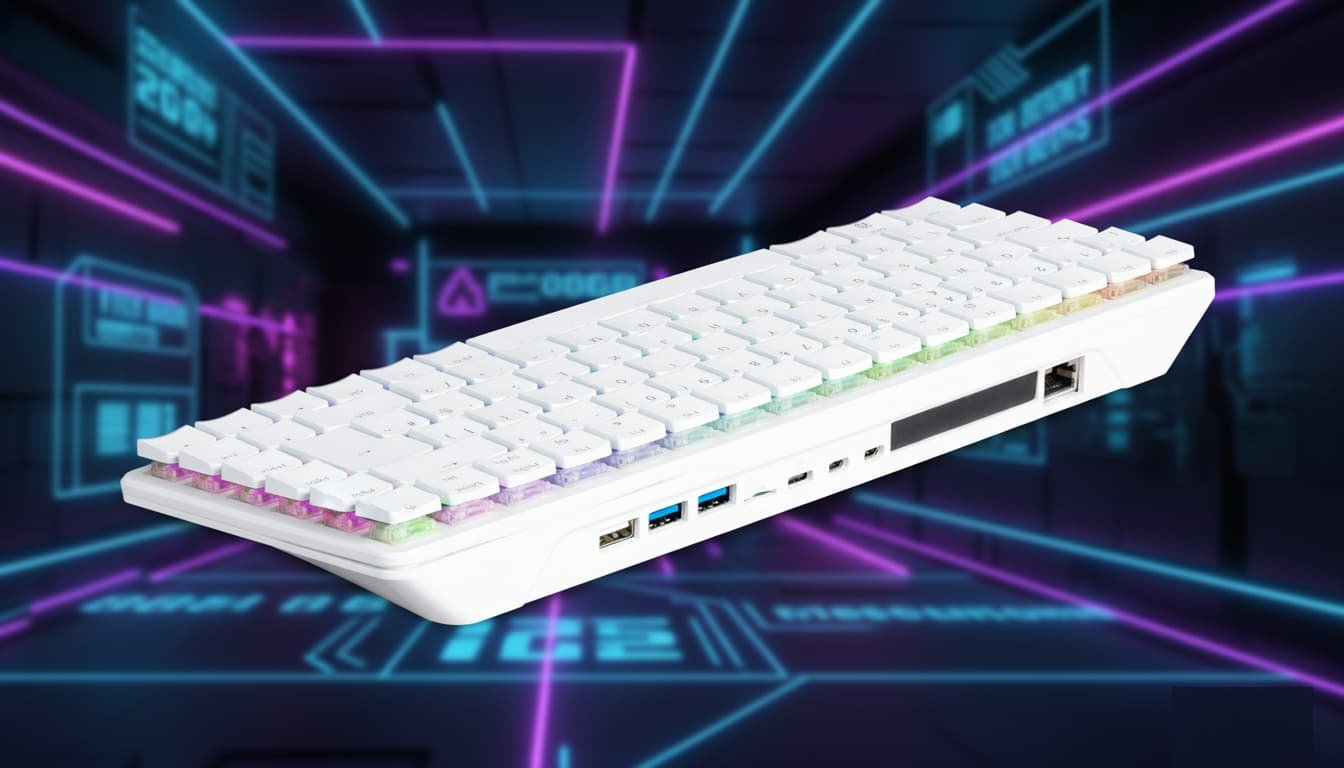
The Raspberry Pi 500 Plus arrives as an unexpected but highly refined upgrade to the original Pi 500, transforming the compact keyboard-PC concept into a far more capable and premium device. This new model elevates the experience with a built-in 256GB M.2 SSD, a mechanical low-profile keyboard, full per-key RGB lighting controlled by an onboard RP2040, and an upgraded thermal design to support higher performance from the Raspberry Pi 5–class hardware inside.
The form factor remains compact and tidy, with a clean rear I/O layout and a level of polish not typically associated with low-cost maker-focused computers. The integrated SSD means the traditional reliance on microSD storage is no longer mandatory, delivering significantly faster boot times, better reliability, and a far more desktop-like workflow. With support for up to a 2280-size M.2 drive, the 500 Plus becomes the most storage-flexible Raspberry Pi device ever released.
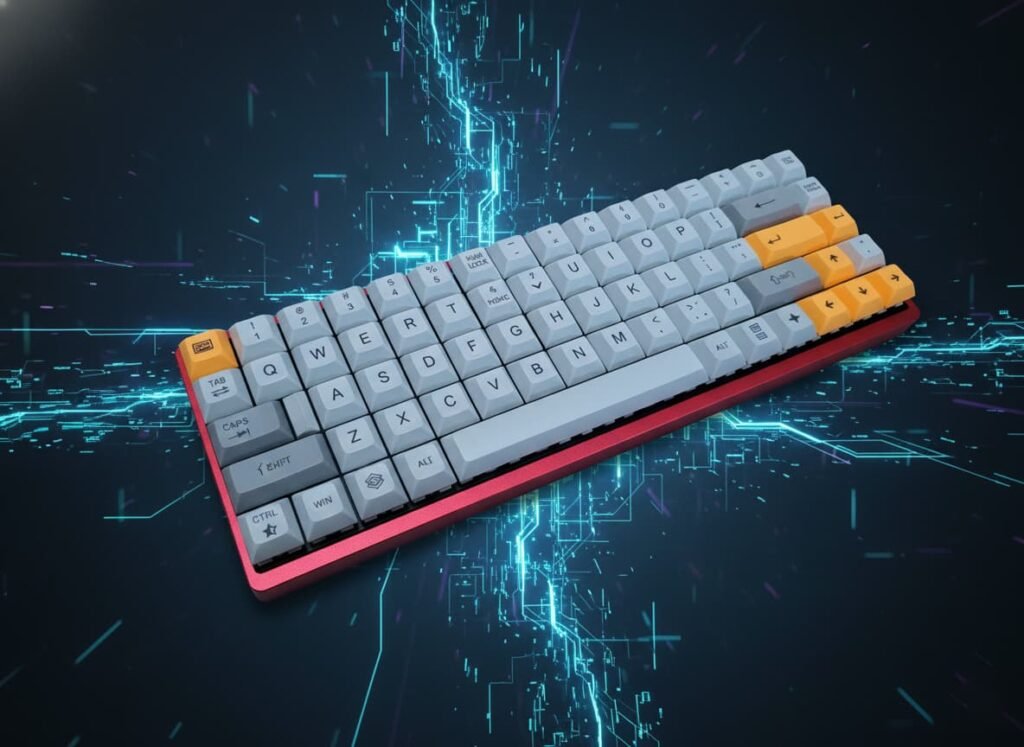
The centerpiece of the Raspberry Pi 500 Plus is its mechanical keyboard, built using low-profile Gateron KS33 blue switches. These switches offer a crisp tactile click and a surprisingly premium feel given the Raspberry Pi’s historical emphasis on affordability. The low-profile keycaps match the compact design, but the hot-swappable layout allows complete customization.
Each key features individually addressable RGB lighting, managed by an onboard RP2040 microcontroller. Through Raspberry Pi OS, the user can access a full lighting configuration utility, enabling presets such as hue wave, digital rain, heat map, splash effects, multi-splash, and pixel rain. Speed adjustments and custom lighting patterns add depth to the experience, and the keyboard’s LEDs are bright, clean, and visually appealing.
Raspberry Pi has also embedded interactive features within the lighting system. A small Flappy Bird-style game runs directly on the keyboard’s LEDs, turning the keybed into a miniature light-based game grid. Running entirely on the RP2040, this feature hints at future community-created LED games and utilities.
Removing the bottom panel reveals a clean internal layout, including a full aluminum heat spreader that contacts the Raspberry Pi 5’s 2.4GHz quad-core Cortex-A76 processor. This thermal design supports standard operation as well as overclocking, which the Raspberry Pi 5 platform officially allows.
Next to the heat spreader sits the pre-installed Raspberry Pi-branded 256GB M.2 2230 SSD. The slot supports full-length 2280 drives, offering broad compatibility for larger or faster storage options. Wi-Fi AC and Bluetooth 5.0 are built in, and the unit retains the standard 40-pin horizontal GPIO header on the rear for maker projects, expansion boards, or custom integrations.
The underside includes large rubber pads for desk stability, while the removable keycaps and accessible screws make maintenance or upgrades straightforward.
Rear I/O includes USB-C for power, dual micro HDMI ports, Gigabit Ethernet, two USB 3.0 ports, one USB 2.0 port, and a microSD slot for legacy compatibility. This layout supports dual-display setups, wired networking, and a broad range of peripherals. The unit boots directly from the internal SSD, and Raspberry Pi OS is pre-installed, offering a smoother desktop experience than microSD-based systems.
During general use, the keyboard feel stands out immediately. Typing is crisp and responsive, and the mechanical switches provide satisfying acoustics while remaining low profile. Web browsing, writing documents, running lightweight applications, and navigating the OS feel noticeably faster due to the SSD’s improved read/write speeds.
The RGB configuration utility in Raspberry Pi OS enables real-time control of lighting effects, key remapping, and macros. Preset animations run smoothly and highlight the quality of the LED integration. For users who want a cleaner look, lighting can be fully disabled or set to subtle static colors.
Beyond productivity, the keyboard’s LED capabilities open the door to a new category of community-driven creativity. The Flappy Bird clone demonstrates how the lighting grid can act as a micro-display, and further pixel-style games or visualizers could follow. The RP2040 lighting engine is flexible enough to support animations, notifications, or interactive experiences.
While the Raspberry Pi 5 hardware inside is not intended for high-end gaming, it can handle retro emulation, lightweight Linux gaming, and browser-based titles. The keyboard-integrated LED effects add an extra layer of fun to the experience and highlight the potential for modders to extend the platform.
Underneath the new chassis, the Pi 500 Plus retains the familiar performance characteristics of the Raspberry Pi 5: a quad-core ARM Cortex-A76 CPU at 2.4GHz, VideoCore VII graphics, and support for overclocking. The large internal heat spreader improves sustained performance, and the SSD dramatically enhances responsiveness compared to microSD systems.
The inclusion of a fully integrated mechanical keyboard, RGB lighting controller, SSD bay, and standard Raspberry Pi 5 internals positions the Pi 500 Plus as the closest thing to a turnkey Raspberry Pi desktop PC. It brings together maker-focused flexibility with modern usability, making it suitable for classrooms, coding environments, developers, hobbyists, and enthusiasts exploring hardware customization.
The Raspberry Pi 500 Plus successfully blends practicality with personality. The mechanical keyboard gives it premium usability, the SSD transforms performance, and the per-key RGB lighting—powered by the RP2040—adds creativity and fun. Full access to internals, expandable storage, a robust thermal solution, and clean rear I/O make this a genuine upgrade from the original Pi 500 and a compelling option for anyone wanting a compact Linux desktop with maker-grade flexibility.
The Raspberry Pi 500 Plus enters the lineup as one of the most thoughtfully designed Raspberry Pi products yet, combining performance, style, and expandability in a single integrated unit.