Breaking News
Popular News


Enter your email address below and subscribe to our newsletter
Smart Discovery Store
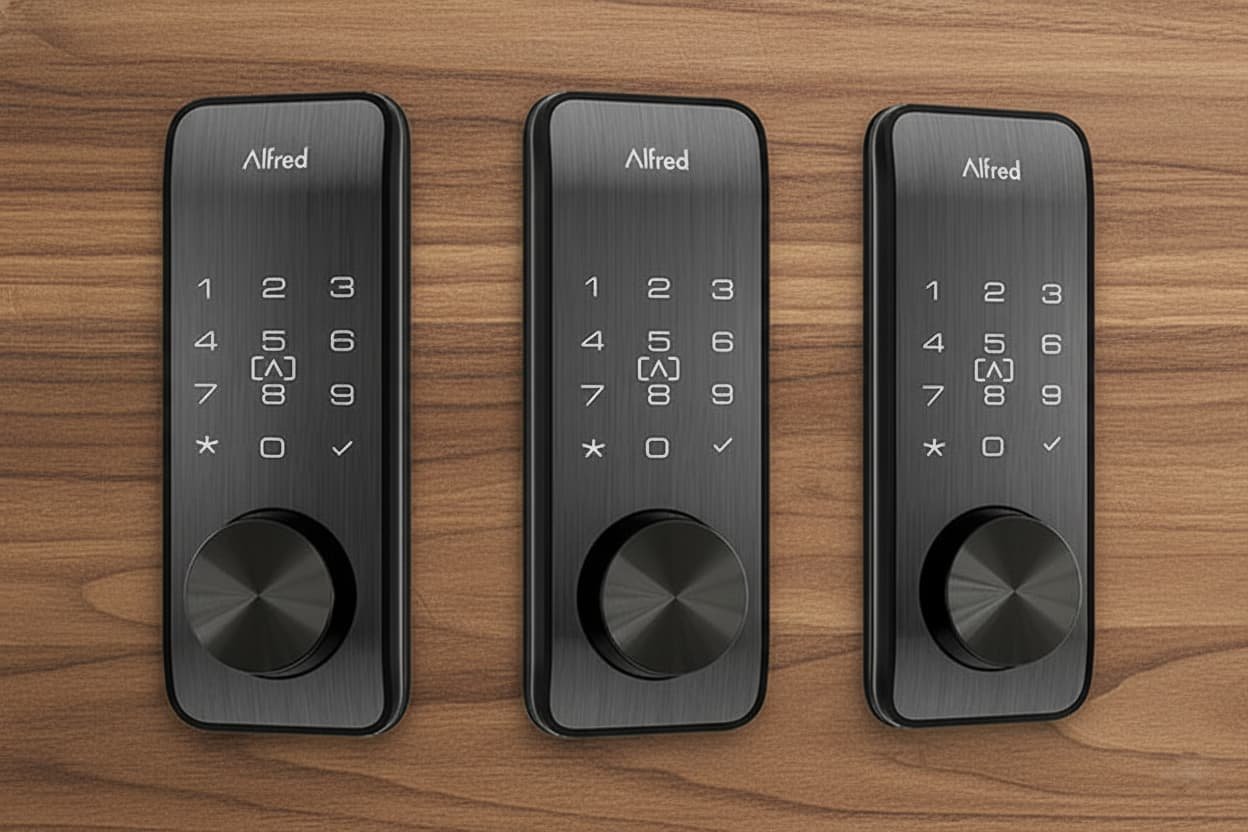
Smart locks today are overloaded with features, apps, protocols, and ways to unlock. But even with all that progress, almost none of them solve the most persistent annoyance in smart home ownership: batteries. A lock might last six months or a year, but once you scale your home with multiple locks, sensors, and connected devices, battery fatigue becomes a real issue.
That’s what makes the Alfred DB2S Key-BL paired with the Wi-Charge wireless power system such a compelling combination. It’s not just a nicer smart lock. It’s a device that quietly eliminates the idea of battery replacement entirely — something no other consumer smart lock does at this level.
The DB2S has always been one of Alfred’s premium models, and it feels like it. The touch-sensitive keypad lights up cleanly, the build quality is solid, and the entire device has a modern, minimal look that suits most homes. Even without wireless power, it’s loaded with access methods:
• touch PIN code
• RFID tag
• Alfred app over Bluetooth
• optional Wi-Fi, Z-Wave, or Zigbee
• good old traditional key
This flexibility matters because different people prefer different entry styles. Guests might prefer a PIN. Family members may use RFID. Remote access is easy with Wi-Fi. The physical key is there for emergencies. It’s one of the most adaptable smart locks available.
But the real story begins when the lock connects to the Wi-Charge wireless power system. If you’ve never seen Wi-Charge before, the concept is deceptively simple: a transmitter mounted across the room sends a narrow infrared beam that delivers power to compatible receivers. No pads, no wires, no physical contact. Just focused long-distance charging.
The beam doesn’t suffer from the rapid power loss that typical “open air” charging does — it maintains efficiency over distance and line-of-sight. This turns the DB2S into something new:
a smart lock that essentially powers itself forever.
The battery inside becomes less of a consumable and more of a buffer — always topped up, always ready, without user intervention. No warnings at midnight, no surprise shutdowns, no seasonal replacements.
This is where the experience shifts from “gadget” to “infrastructure.” Once the wireless charging system is installed, the lock behaves like it’s hardwired — except no drilling and no routing cables through a door. You almost forget a battery exists.
In daily use, the DB2S remains responsive and reliable:
• PIN entry activates instantly
• RFID unlocks with no lag
• The motor feels strong and consistent
• App-controlled locking and unlocking responds quickly
The moment you stop thinking about battery life, everything else becomes smoother. If you travel, rent properties, or manage multiple doors, this reliability becomes a game-changer.
A smart lock lives or dies by its consistency, and the DB2S performs well. The keypad responds smoothly regardless of lighting. The motor is quiet but confident. The optional connectivity modules (Wi-Fi, Zigbee, Z-Wave) let it integrate cleanly into smart home ecosystems.
But the surprising advantage is how the lock behaves when paired with Wi-Charge. The transmitter quietly scans, detects, and maintains a power link with the receiver. It charges in cycles, topping up without ever interrupting normal lock operation. Even better, because the beam is directional and efficient, it doesn’t introduce heat or noise.
The lock simply… works.
Every time.
With no battery thoughts in your brain.
That depends on the user. If you only have one smart lock and enjoy swapping batteries once a year, this might feel unnecessary. But if you’re building a true smart home ecosystem, wireless power begins to make long-term sense.
Imagine:
• No more low-battery alerts
• No more emergency keys
• No more seasonal replacements
• No more “battery anxiety” for rentals or Airbnbs
• Every device that uses IoT power behaving as if hardwired
Wireless power is still a premium technology. Wi-Charge does not sell cheap transmitters or receivers — and the company is famously vague about exact pricing. But for early adopters and serious home automation users, this is one of the most meaningful upgrades available.
What stands out:
• Five access methods — extremely versatile
• Clean modern design
• Strong motor and reliable locking mechanism
• Smooth app performance
• Battery becomes a non-issue with Wi-Charge
• Long-distance wireless power that actually works
Where it still shows limitations:
• Wi-Charge hardware is expensive
• Requires clear line of sight for charging
• Wireless power is still early-adopter territory
But none of these downsides undermine the core experience. The DB2S + Wi-Charge pairing solves a problem that every smart home eventually encounters.
The Alfred DB2S on its own is already a premium, flexible, and reliable smart lock. When paired with Wi-Charge, it becomes something entirely different — a self-maintaining device that behaves like a wired smart lock without requiring wired installation.
If you’re just replacing a single lock, this setup might feel excessive. But if you’re building a long-term smart home ecosystem built on convenience, reliability, and automation, the combination feels like a glimpse into the future. Wireless power removes the last major weakness of battery-powered IoT devices.
This isn’t just a smart lock.
It’s a preview of how smart homes will work when devices power themselves quietly in the background — and you never think about batteries again.