Breaking News

Popular News



Enter your email address below and subscribe to our newsletter
Smart Discovery Store
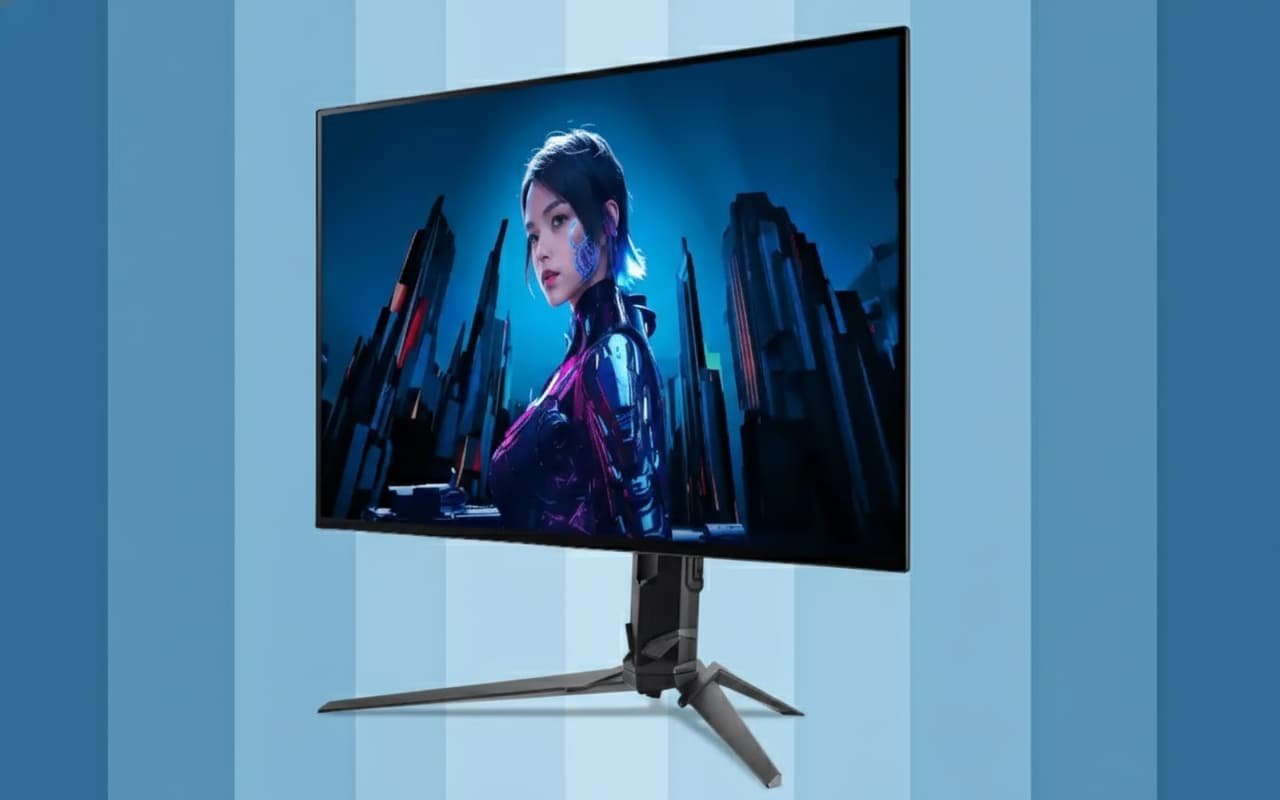
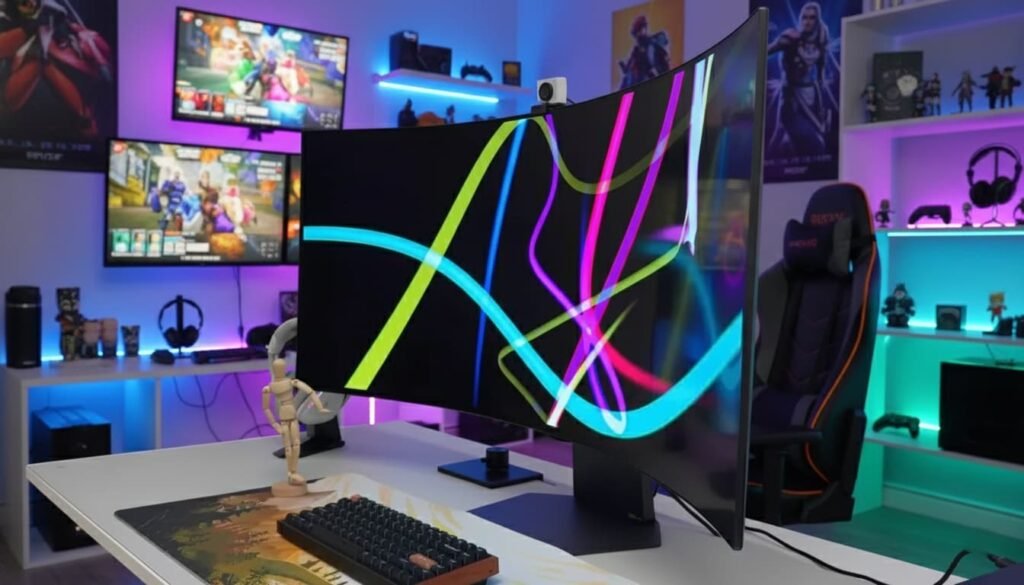
Some products push boundaries. This one smashes them. ASUS’s new flagship 27-inch gaming monitor delivers something the industry wasn’t even sure was possible: 1440p at 540Hz and a second mode that unlocks a completely mind-bending 720Hz refresh rate. Those numbers barely sound real, but after testing it extensively, the breakthrough becomes obvious — this is the first monitor that clearly shows what’s coming next in competitive gaming displays.
Before talking about the crazy refresh rates, two underrated innovations deserve attention. First, the coating. This is the most effective anti-glare coating I’ve ever seen on any monitor, OLED or LCD. Even under brutal overhead lighting, the blacks don’t wash out. They stay deep, clean, and shockingly glossy without the purple-gray tint you typically see on QD-OLED models. It almost looks fake — like a calibration trick — but it’s just extraordinary engineering.
Second, this is the first tandem OLED gaming display I’ve reviewed. With stacked OLED layers boosting brightness and panel longevity, it finally delivers meaningful improvement over previous OLED monitors. Peaking well above 330 nits, it’s the brightest OLED gaming monitor I’ve tested so far. Not LCD-bright yet, but far past the point most players would ever run at full output.
The primary mode runs at 1440p 540Hz, making it the fastest high-resolution gaming display on the market. ASUS already sells a 480Hz 1440p panel — and if you have that, the jump is small but still impressive. But for anyone upgrading from a 240Hz display, especially a non-OLED panel, the leap is enormous.
Smoothness improves dramatically. Motion clarity hits another tier entirely. Targets become easier to track visually. Responsiveness hits a point where your brain instantly notices the difference. Once you’ve experienced 500Hz-plus gaming at high resolution, you simply don’t want to go back.
Your games look sharper, react faster, and feel more connected to your inputs. It’s as close as gaming gets to feeling telepathic — instant motion, zero smear, and no perceptible drag. If your PC can push the frames, this mode is game-changing.
Then there’s the second mode: 720Hz at 720p, the fastest option any consumer monitor has ever offered. It sounds incredible, and in motion tests like UFO ghosting, it looks unreal — the clearest sample I’ve ever seen, even compared to elite 480Hz and 500Hz panels.
But there’s a catch.
The downscaled 720p image is far rougher than expected. Even for players who prefer lower resolutions for esports, this mode pushes the limits of what’s usable. Textures soften drastically. Character detail drops. Long-range visibility becomes guesswork. Some games reduce render distance so severely that distant enemies look like scattered pixels.
Competitive titles like Valorant can push the necessary frame rate to actually benefit from 720Hz, and the smoothness is undeniable in close-quarters fights. But beyond a few meters in range, aiming accuracy collapses at 720p. Even Overwatch — where clarity matters less — suffered at anything but short engagement distances.
Increasing render scaling and raising graphics settings helps, but the resolution remains a dramatic downgrade. The mode is incredible to witness, but not practical for most players. Ultimately, 1440p 540Hz hits the sweet spot: around 85–90% of the perceived smoothness of 720Hz with triple the clarity.
Visually, the monitor stands out. The transparent rear housing, white accents, and silver elements give it a futuristic presence — especially on a clean white desk setup. The only drawbacks are the silver front border and the noticeable chin, which would look cleaner in black.
Still, the aesthetic is unique, premium, and unmistakably high-end.
When compared to MSI’s 500Hz QD-OLED model, things get interesting. MSI’s version costs roughly $350 less and offers extremely similar real-world performance. Where ASUS wins is brightness, text clarity, and the insanely effective anti-glare coating. For players who want the absolute top of the top — with no compromises — ASUS holds that crown. For those wanting flagship performance at a lower price, MSI remains a strong contender.
This ASUS tandem OLED isn’t just another spec-flex. It’s a clear signal of where gaming displays are headed. The 540Hz 1440p mode is astonishing in clarity and responsiveness. The 720Hz mode is a technological showpiece — impractical but mesmerizing.
Between the anti-glare coating, tandem OLED brightness, elite motion clarity, and unmatched responsiveness, this is the best gaming monitor ever made for players who want the maximum competitive edge and don’t care about cost.
If you want the absolute fastest experience available today, nothing beats it.