Breaking News
Popular News



Enter your email address below and subscribe to our newsletter
Smart Discovery Store
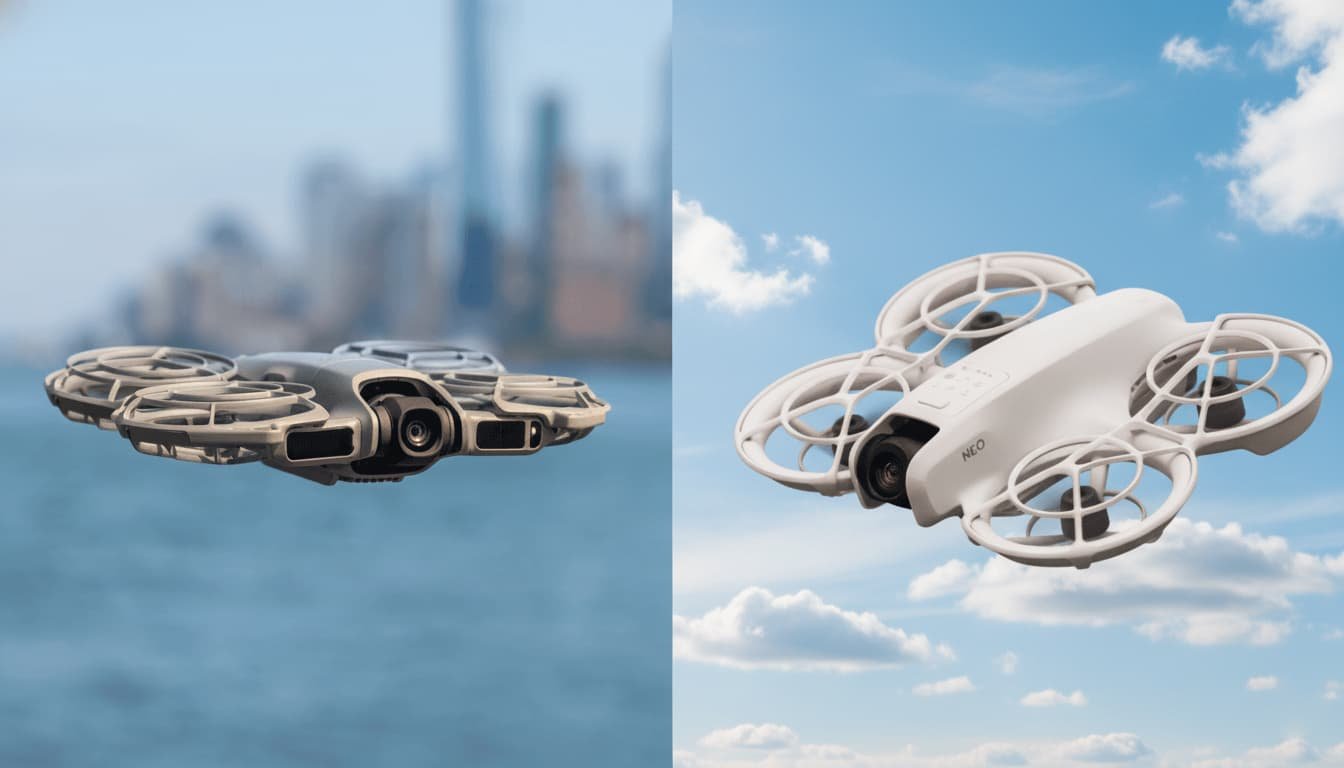
The DJI Neo2 arrives as a major refresh to DJI’s ultra-light beginner drone, keeping the same simple design philosophy while fixing nearly every limitation of the original Neo. After several weeks of testing, the Neo2 feels more capable, more stable, and far more reliable—especially for new pilots. While the overall shape remains familiar, the new darker gray shell, slightly larger frame, and added weight signal a drone that has grown up. The body still does not fold, but the redesigned structure, upgraded sensors, and improved display introduce a more premium feel. Across every test, from image quality to tracking stability, the Neo2 shows clear improvements that finally make this entry-level drone feel ready for real-world flying rather than just casual social media clips. Let’s break down the major upgrades and how they compare to the original model.
Although the Neo2 still uses a 1/2-inch sensor on paper, the image improvements are immediately visible. Footage shows noticeably more detail, less noise, richer colors, and better handling of sunrise and sunset scenes. Dynamic range is significantly improved, allowing high-contrast shots without crushed shadows or blown highlights. It’s a meaningful jump from footage that previously looked best on a smartphone screen to footage that holds up well even on larger displays. Night footage becomes brighter thanks to an f2.2 aperture and increased ISO limit, but like most small drones, low-light video remains soft and grainy. Resolution upgrades include full 4K 60fps recording—double the frame rate of the first Neo—and a 2.7K vertical mode, though this is a crop since the gimbal does not rotate physically. The new two-axis mechanical stabilization, combined with RockSteady electronic stabilization, produces much smoother results, particularly when flying in evening light where the original Neo struggled badly.
Flying without a controller remains a core feature, but the Neo2 now brings smarter tools and a more intuitive interface. The new front screen replaces the simple indicator lights from the older Neo, letting you adjust QuickShot settings—such as follow distance or height—directly on the drone. Auto-takeoff and auto-land have also been improved: instead of walking toward the drone to trigger palm landing, you simply show your palm and it flies back to you reliably. New QuickShot options include Dolly Zoom and MasterShots, which automatically create a cinematic sequence of clips with multiple angles in one launch. Gesture control is one of the standout additions. Raising your palm lets you slide the drone left, right, up, or down. Bringing both hands apart or together adjusts distance instantly. This removes the biggest annoyance of the older Neo—needing to land, adjust settings in the app, and take off again just to change tracking behavior.
Tracking receives one of the largest upgrades. Instead of only tracking from the front, back, or sides, the Neo2 now includes a trace wheel similar to DJI’s higher-end models. You can position the drone at front-left, back-right, or move it between two points dynamically for more cinematic motion. Tracking speed increases to 12 m/s, and the drone now supports bike tracking—something the original model could not handle. When flown with a controller, the Neo2 can even track cars, and it performs impressively well. The new omnidirectional obstacle avoidance is a breakthrough at this price. A front LAR sensor plus top and bottom avoidance sensors allow the drone to dodge obstacles reliably, continue tracking, and prevent the drifting and height loss that plagued the first Neo—especially over water. The Neo2 now holds position confidently over oceans, snow, and cliffs without unpredictable movement.
The Neo2’s improved Wi-Fi system delivers a much stronger connection when flying with a smartphone. In side-by-side range tests, the original Neo loses connection quickly while the Neo2 remains solid. DJI rates smartphone operation up to 500m. If you prefer full physical controllers like the RCN3 or RC2, the Neo2 requires a new digital transceiver attachment, included in the Fly More Combo. This module screws into the back of the drone and enables O4-level long-range signal strength with up to 10km FCC or 6km CE distance. It drastically improves reliability and removes the random feed dropouts seen in the first-generation model.
The first Neo was known for surviving crashes, and the Neo2 continues that tradition. Detachable prop-guards and new front bumpers protect the camera and gimbal from impact. The redesigned propellers and more aerodynamic frame allow better wind resistance, which is obvious when flying in moderate gusts—the Neo2 stays locked in position while the original Neo visibly drifts and struggles. The Neo2 feels stable even at higher altitudes, inspiring more confidence during complex shots. Battery design has been updated with a secure top-loading mechanism, and overall flight time remains the same at a stated 17 minutes. In real-world usage, expect around 13 minutes depending on wind and flight mode. The Fly More charging hub can charge all three batteries to 100% in about 68 minutes.
The DJI Neo2 is a major step forward over the original model. Better image quality, improved stabilization, smarter autonomous tools, reliable tracking, omnidirectional obstacle avoidance, stronger connectivity, and far better stability combine to create a drone that finally feels complete. For beginners and casual creators, the Neo2 delivers premium features in a compact, durable package at an accessible price—making it one of the most compelling entry drones available today.