Breaking News
Popular News


Enter your email address below and subscribe to our newsletter
Smart Discovery Store
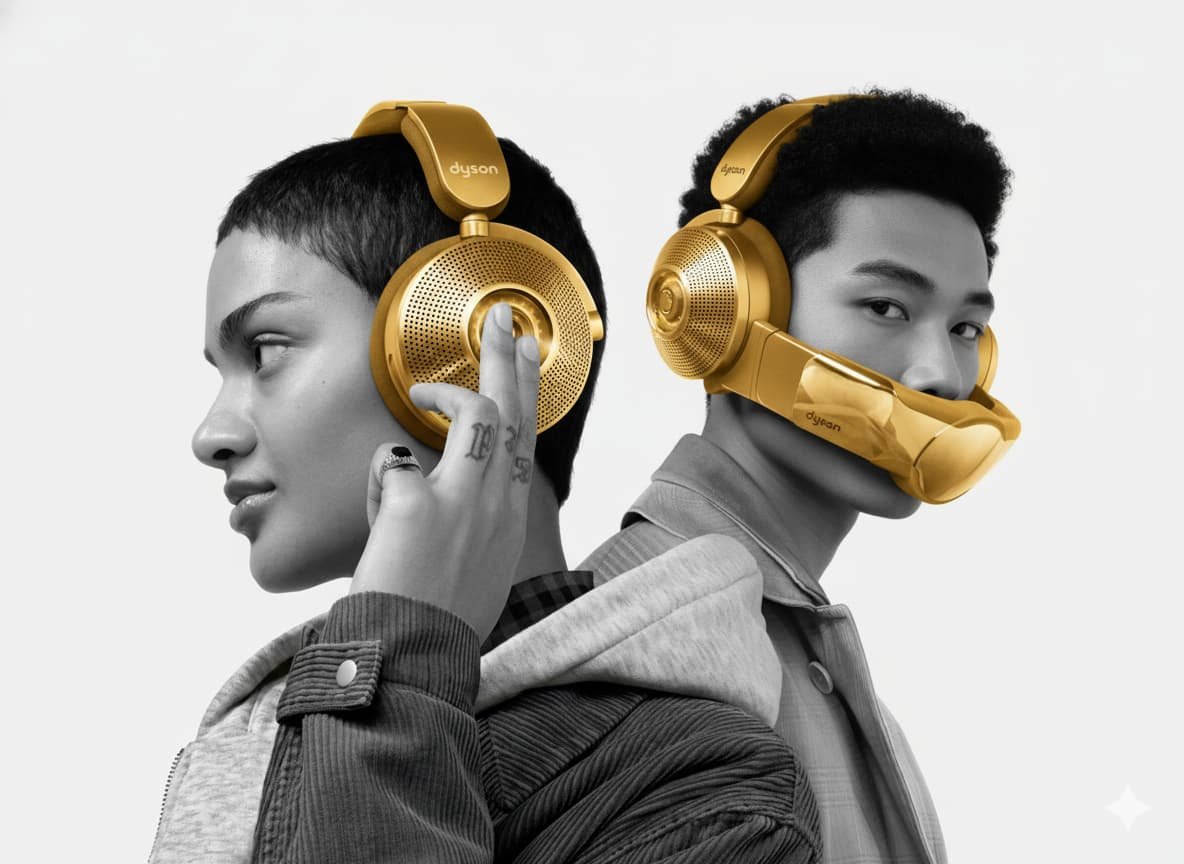
When Dyson first entered the headphone market last year with a combination headset and wearable air purifier, it was one of the most unusual gadgets to come out of the company. It featured impressive engineering, but the execution made it more of a novelty than a practical product. Now Dyson is back with a completely different approach: a standalone pair of premium noise-canceling headphones priced at $500.
By removing the air-purifier attachment, Dyson has focused entirely on the audio experience and industrial design. The result is a pair of full-size headphones that aim directly at the same luxury segment dominated by Apple’s AirPods Max. With Apple’s flagship remaining unchanged for years—still heavy, still using a Lightning port, and still priced at $550—Dyson clearly sees an opportunity.
The question is whether these new Dyson headphones deliver enough performance and comfort to justify their price in a highly competitive market.
Dyson has a long history of premium engineering and distinctive design, and that expertise shows in these headphones. The entire frame is made from metal, including the ear cups, hinges, and headband structure. The top cushion is soft, but the side cushions feel firmer because they contain part of the internal battery system.
This shifting of battery weight away from the ear cups and toward the band helps balance the headphones more evenly across the head. It’s an important detail because Dyson’s headphones are extremely heavy—heavier than the already weighty AirPods Max. They come in at 451 grams, making them some of the heaviest wireless ANC headphones available.
Surprisingly, they still feel reasonably comfortable during long listening sessions. Even with the added weight, Dyson spreads the load well enough that the pressure doesn’t concentrate on one area.
One of Dyson’s most unique features is the ability to easily swap both the ear cushions and the exterior back plates. Both components attach using a simple quarter-turn mechanism that locks them firmly into place. Since these pieces are removable, owners can mix and match different colors or materials.
The included components match the base color configuration you select at purchase, but additional parts cost $50 each. This gives users room for personalization, though it does add to the overall cost if you want multiple styles.
While this feature may feel like a design gimmick, Dyson has clearly invested in the mechanisms that make it work smoothly. The twist locks are secure, and the parts fit with a tight, precise feel.
Dyson uses a physical “joystick” control on the back of the right ear cup. This single control handles nearly everything:
It protrudes slightly, making it easy to find without looking. This is one of the most well-designed control systems on any premium headphone.
Noise cancellation and transparency mode are toggled by double-tapping the left ear cup. Unfortunately, this gesture works inconsistently. The surface isn’t touch-sensitive; instead, it relies on force detection, so users often find themselves tapping harder than expected to trigger it.
The headphones also support multipoint pairing, allowing simultaneous connection to two devices—such as an iPhone and an Android phone. Automatic wear detection pauses audio when you remove them and resumes playback when you put them back on.

Dyson’s carrying case stands out from typical rigid zipper cases. It uses two firm silicone boards connected by elastic fabric, allowing the headphones to fold flat and slide inside. There’s a small pocket to store cables, and the materials feel durable.
However, it’s worth noting that the headphones don’t fold into a compact shape. Their size and weight make them less travel-friendly than many competitors.
The Dyson companion app provides access to listening modes, EQ presets, and live noise-level monitoring. The real-time graph displays outside sound levels compared to inside the headphones. While not essential, it is interesting to view occasionally.
Preset EQ options include:
There is no fully custom EQ option, which may disappoint buyers who expect more control at this price point.
When compared directly with Apple’s AirPods Max, the Dyson headphones deliver good—but not top-tier—sound. Across most genres, AirPods Max maintain clearer detail and a wider soundstage.
Dyson’s “Enhanced” preset offers the best balance. It provides strong low-frequency response, detailed mids, and clean highs. However, the shallow ear cup design means the driver sits close to the ear, reducing the sense of width and separation. This limits immersion, especially in complex tracks.
Overall, sound quality is solid for premium ANC headphones but does not exceed expectations for this price range.
Dyson includes eight microphones for noise cancellation, and performance is decent. White noise, fans, and low-frequency hums are reduced effectively.
However, top competitors—Sony’s WH-1000XM6, Bose QuietComfort Ultra, and AirPods Max—deliver stronger noise suppression across a wider range of environments. Transparency mode is functional but only average, allowing outside voices through with moderate clarity.
Battery life is where the Dyson headphones excel. With up to 55 hours of use with ANC enabled, they significantly outperform nearly every major competitor. Apple’s AirPods Max offer around 20 hours, Sony’s XM6 around 30 hours, and Bose’s Ultra around 24–30 hours depending on mode.
Dyson achieves this by placing the battery cells inside the headband, distributing the weight and increasing total capacity. For users who want long listening sessions with minimal charging, this may be the headphones’ most appealing feature.
Dyson’s latest headphones feel like a response to AirPods Max: similar style, similar target audience, and similar balance of strengths and weaknesses. They offer:
But when compared to traditional high-end ANC headphones in the $300–$350 segment from Sony, Bose, or Sennheiser, the Dyson headphones appear overpriced. Those competing models generally provide better noise cancellation, wider soundstage, more comfortable weight, and stronger all-around experience at a lower cost.
Dyson’s premium wireless headphones deliver unique design features, excellent battery life, and respectable sound quality, making them an interesting option for buyers seeking something different. For users specifically frustrated by AirPods Max’s weight, aging design, or limited compatibility with non-Apple devices, Dyson presents a viable alternative.
However, when compared to leading mainstream ANC headphones at lower prices, Dyson’s offering feels expensive for what it delivers.
These headphones make sense only if you value their design, customization system, and long battery performance. Otherwise, stronger overall value exists elsewhere in the market.