Breaking News
Popular News




Enter your email address below and subscribe to our newsletter
Smart Discovery Store
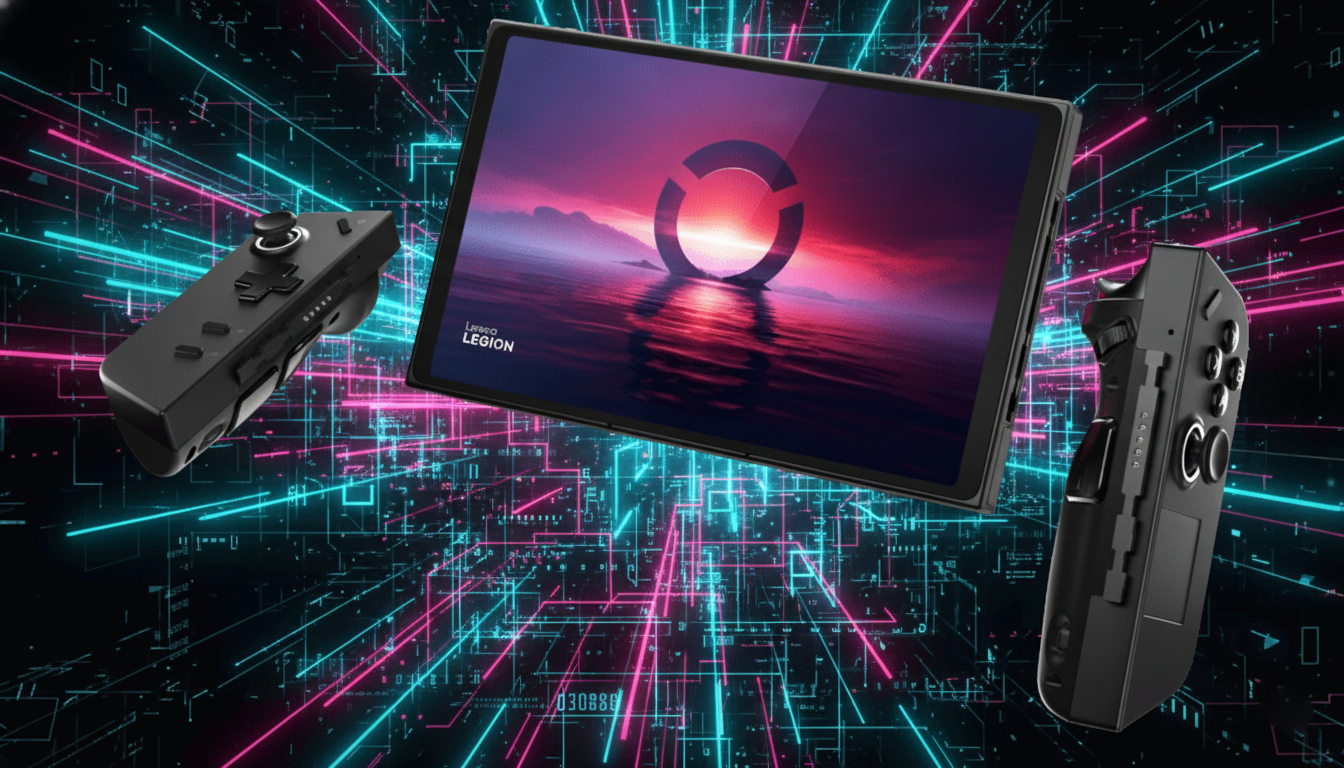
The Lenovo Legion Go arrives into a crowded handheld market already filled with strong competitors, yet it immediately stands out for one defining reason: it’s the first handheld gaming device that genuinely lets you play first-person shooters competitively. This isn’t just another portable machine for indie games or light RPGs — Lenovo built something that fundamentally changes what handheld PC gaming can do. The combination of large display, detachable controllers, unique FPS mouse mode, and flexible performance settings gives it capabilities no other handheld has offered before.
At first glance, the Legion Go looks like a Switch for grown-ups — large, aggressive, and built for serious gaming. The detachable controllers mimic the Switch mechanism visually, but the engineering is entirely different. Instead of sliding along rails, they depress and slide downward to detach, snapping back with ease when reattached. Once separated, the device transforms from a traditional handheld into a small gaming station thanks to its built-in kickstand. The hinge travels along a metal rail, and unlike flimsy tablet stands, this one feels engineered to survive years of adjustments without wearing out.
The display is one of the biggest highlights: an 8.8-inch, 2560×1600 panel that dwarfs the Steam Deck’s 7-inch screen. Despite initial concerns about driving such a high resolution on a handheld, the Legion Go cleverly supports integer scaling — meaning demanding AAA titles can run at crisp 1280×800 without blurry scaling artifacts, while 2D games or emulators can take full advantage of the 1600-pixel height. The larger body does make it bulkier than its rivals, and while the ergonomic grips help, it doesn’t achieve the perfectly natural hand-feel of the Steam Deck. Still, it feels solid, and the premium Legion build quality is noticeable everywhere.
The casing is plastic rather than metal, but the finishing, venting layout, and internal structure feel more like a compact gaming laptop than a toy. The bottom SD card slot, dual USB-C ports, and well-positioned buttons give it flexibility for docked, tabletop, or handheld modes.
The detachable controllers are the real innovation. The right controller includes a Hall-effect joystick for drift-free performance, a small trackpad for precision cursor movements, and — most importantly — an FPS mode activated by a physical switch. Once toggled, the controller drops into a small plastic dock that transforms it into a vertical mouse. The sensor tracks movements with surprising accuracy, and within minutes it becomes intuitive. It’s not a full desktop mouse replacement, but it’s good enough to actually compete in shooters.
Paired with the left controller acting as a WASD module, the Legion Go becomes the first handheld where Overwatch, Apex Legends, Valorant-style aim, and traditional PC shooters feel playable. Not “handheld playable” — actually playable. This changes everything. Before this device, handheld gaming meant compromising on input precision, relegating shooters to a novelty rather than a real option. Here, precision aiming is possible on a portable system without relying on analog sticks or external peripherals.
Button layout is generally strong, but the D-pad is clicky and stiff. Fighting-game players won’t love it, though others may appreciate the feedback. Back buttons feel uneven — the left side is natural, while the right side sits in an awkward place due to how the controller needs to function in FPS mode. The replaceable joystick tops are a nice touch, even if the default hard plastic grips aren’t ideal.
Inside, the Legion Go uses AMD’s Z1 Extreme — the same high-end chip found in the ROG Ally. But Lenovo pairs it with faster RAM and a higher-resolution screen, resulting in performance that often leads the category. At native resolution, demanding games will push the limits, but dropping to 1280×800 with integer scaling provides smooth, sharp gameplay. Thermal performance is respectable thanks to a well-designed intake and exhaust system and a surprisingly thick back panel. Fan noise is present under load but remains within the expected range for handheld devices.
The battery is 49.2Wh — around 15–20% larger than the Ally. Real-world runtimes vary by workload, but the extra capacity helps offset the larger display and higher resolution. For mixed gaming at reasonable settings, expect similar or slightly better longevity than other Windows handhelds, depending on game and brightness.
Lenovo’s optional AR glasses provide a floating virtual monitor when connected to the Legion Go. Unlike earlier AR solutions, these feel surprisingly comfortable thanks to rubberized support, lighter materials, and interchangeable nose pads. They project the Legion Go’s screen directly into view, offering an immersive, private gaming setup without requiring additional configuration. While pricing wasn’t finalized at the time of testing, the glasses feel like a premium yet practical accessory for travel or discreet gaming.
The main device case is reminiscent of Nintendo’s Switch packaging, thoughtfully molded to hold the controllers, body, and FPS dock. There’s even a cutout for charging the device while it sits inside the case — a small but welcome detail.
Opening the Legion Go requires more effort than accessing the Steam Deck or ROG Ally, but once inside, the layout is clean and laptop-like. The SSD is user-replaceable, though RAM appears soldered with no access panel. A single fan handles cooling, and the speakers sit behind the screen. The construction of the internal frame is robust, matching the external perception of durability.
The Lenovo Legion Go is the first handheld that truly expands what portable PC gaming can be. The large display, strong performance, customizable resolution, and kickstand support make it a versatile entertainment device. But the real breakthrough lies in its detachable controllers and FPS mouse mode. That single feature unlocks half the gaming market that handhelds have historically struggled with. Competitive shooters, fast-paced aim-heavy gameplay, and mouse-driven genres finally feel viable on a portable device.
It isn’t perfect — the D-pad is stiff, ergonomics lag behind the Steam Deck, and early software builds need refinement. But none of those drawbacks overshadow what Lenovo accomplished: a handheld designed not just for casual gamers, but for players who want real PC input precision anywhere they go.
For the first time, handheld gaming doesn’t feel limited. The Legion Go feels like the beginning of a new category — a portable system built for the full PC gaming experience, not a reduced version of it.