Breaking News
Popular News




Enter your email address below and subscribe to our newsletter
Smart Discovery Store
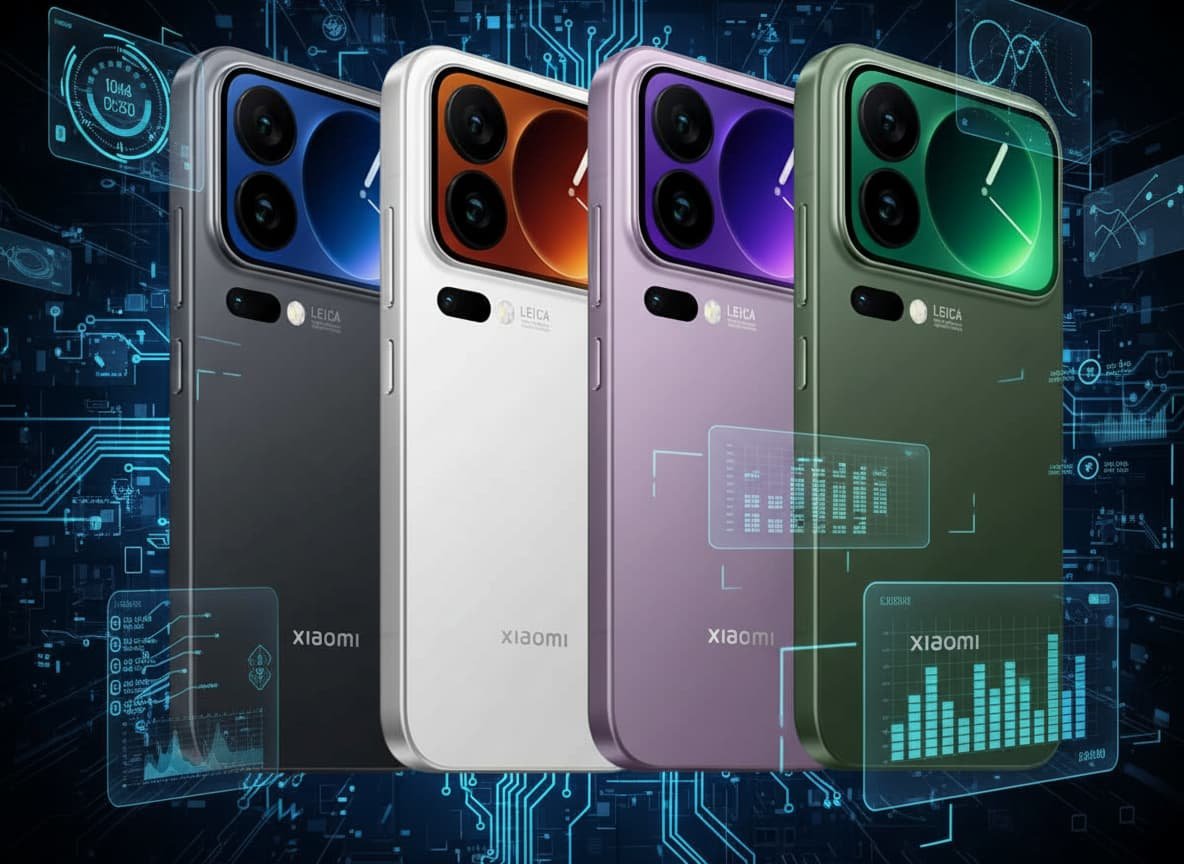
Xiaomi’s new flagship series, the Xiaomi 17 Pro and 17 Pro Max, has generated a lot of attention—partly because of its familiar-looking design, and partly because of the dramatic new hardware features Xiaomi has added. At first glance, the phones look similar to Apple’s latest models, from the naming structure to the camera layout. This may be intentional marketing, positioning Xiaomi next to a globally well-known device. But once you spend time with the phones, it becomes clear that Xiaomi is doing things here that no other company currently attempts.
This review breaks down the design, performance, cameras, and the new rear display, while also exploring whether this feature is a meaningful innovation or simply a bold marketing experiment.
The unboxing experience immediately sets a premium tone. Both the Xiaomi 17 Pro and 17 Pro Max come with a tall box, a 100W fast charger, USB-C cable, and a hard-shell case. Xiaomi continues to include fast chargers in the box, which is becoming rare among high-end brands.
Visually, the phones resemble an iPhone from the back due to the square camera module. Even the software interface leans toward an iOS-inspired aesthetic, with rounded icons, a pull-down control center, and certain animation styles. However, when you pick up the device, it does not feel like a copy. The metal frame, the precise borders around the display, and the high-brightness panel all feel premium and well-engineered.
Despite the extensive hardware packed inside, weight is surprisingly lower than many competing flagships, including Samsung’s and Apple’s top models.
One of the most impressive areas of these devices is battery capacity. The Xiaomi 17 Pro includes a 6,300mAh battery, while the 17 Pro Max jumps to a massive 7,500mAh. These are some of the largest batteries ever used in premium phones. They outperform the iPhone 17 Pro Max and Samsung S25 Ultra by huge margins.
The reason Xiaomi pulls this off without making the phone bulky is its silicon-carbon battery technology. This allows high energy density, meaning the battery stores more power without increasing size or weight. In real usage, battery endurance is outstanding, easily lasting through heavy days and stretching into two days for moderate users.
Inside both phones is Qualcomm’s Snapdragon Elite Gen 5 processor, likely to be the main flagship chip for Android phones in the upcoming year. Xiaomi pairs this with up to 16GB of extremely fast RAM and next-generation storage speeds. Benchmark results place these devices ahead of many Android phones currently on the market.
Heat does build up during intense tasks, but it never seems to affect performance. The cooling system keeps the chipset running at predictable and stable speeds.
Xiaomi has nailed the fundamentals—strong performance, long battery life, solid haptics, and a high-quality display. And these strengths become important when considering their bold new feature.

One of the biggest talking points is the integrated second display on the back of the phone. We have seen small rear screens from other brands in the past, but Xiaomi’s execution is entirely different. This is not a low-resolution novelty; it has the same brightness, responsiveness, refresh rate, and glass quality as the main front display.
The rear glass even comes with a factory-applied screen protector, which helps reduce concerns about scratches when placing the phone on its back.
Xiaomi promotes this feature as a way to personalize the phone. There are multiple types of wallpapers, animated designs, clocks, and even interactive elements such as digital pets or AI-generated backgrounds. You can enter text, choose colors, or customize designs entirely.
Beyond decoration, the second screen provides practical functions:
Although integrations with third-party apps are limited for now, this may expand when the global version launches.
The most useful function of the rear screen is its connection to the camera system. You can take full-resolution rear-camera selfies using this screen as a viewfinder. This gives dramatically better image quality than typical front cameras.
The main camera system already performs strongly, delivering detailed photos with excellent dynamic range. Portrait mode is reliable, zoom quality is impressive, and even 8K selfie video is possible using the rear cameras and the second display.
The gesture for activating the rear-camera viewfinder is straightforward—you simply rotate the phone and swipe. Xiaomi also implemented smart touch-blocking so accidental presses are avoided.
For users who take a lot of photos or videos of themselves, this alone is a major upgrade.
In an unusual addition, Xiaomi designed a special case with built-in physical buttons to let you play games on the rear display. The screen is small, but the experience is smooth and surprisingly polished. While this is unlikely to become everyday usage, it demonstrates the level of detail Xiaomi put into making the rear display more than a visual gimmick.
Outside of the selfie advantages, the regular camera performance is competitive. Detail is high, dynamic range is strong, and the zoom system produces sharp results. The ultra-wide lens is weaker in low light but performs well during the day.
In some regions, color tuning may lean toward specific preferences, which could explain minor differences in skin tone representation. This may be refined when global units ship.
Xiaomi’s software blends Android with features inspired by iOS. The interface is smooth, haptics are excellent, and animations are polished. The company appears to be shifting toward a more unified, premium design language.
The second-screen software is the most experimental part, but also the area where Xiaomi clearly invested a significant amount of development time. The UI is filled with custom animations, transitions, and creative visual ideas.
The Xiaomi 17 Pro and 17 Pro Max deliver powerful performance, best-in-class battery life, and an ambitious second display that offers both convenience and creative expression. While the phones resemble Apple’s devices in design and naming, their hardware identity is distinctly Xiaomi.
The second screen is not essential for every user, but it adds meaningful value in photography, personalization, and quick controls. It also draws attention to a phone that is already strong in all core areas.
These devices make a bold statement in the flagship market, showing that Xiaomi is not afraid to experiment at the highest level while still delivering excellent overall performance.